Quick answer
In Salvador Bahia real estate, what you need to check depends less on the price and more on the kind of area: a waterfront apartment may sit on federal navy land, an older building in Graça or the Barra may have renovations that were never recorded, a house in a gated community may be on a lot with an unclear legal form, and an off-plan unit depends on the developer's registration. In every case, ownership only exists once your deed is registered at the land registry office that covers the neighborhood, after a 3% city transfer tax and with condominium fees and property tax paid up.
Key points
- Salvador has three kinds of high-value areas: the Atlantic waterfront, the bay side and the inland hills, and each brings its own legal checks.
- The transfer tax (ITIV) is paid to the Salvador city hall, and the deed is registered only at the registry office of the property's district.
- Unpaid condominium fees and property tax (IPTU) follow the apartment to the new owner.
- Dr. Gabriela's office is in the STIEP neighborhood, so you can review the purchase in person when you are in the city, or entirely from abroad.
How real estate in Salvador, Brazil is laid out for a foreign buyer
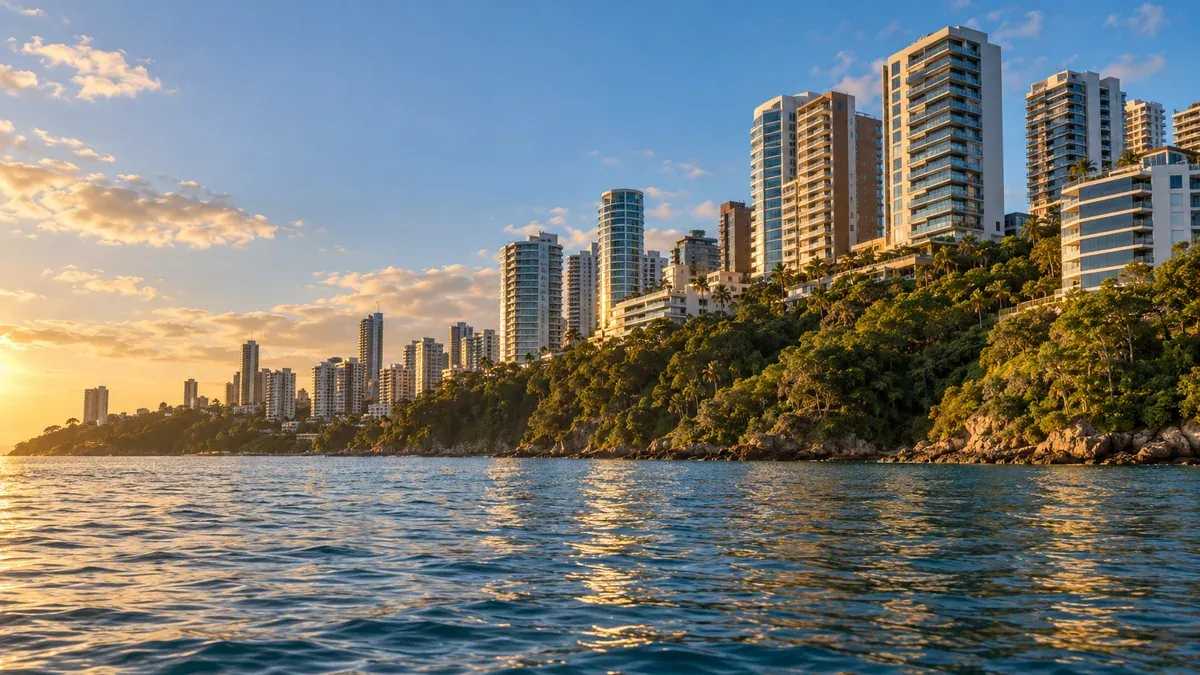
Salvador sits on a peninsula between the Bay of All Saints and the Atlantic, and its high-value property falls into three belts: the bay side around the Corredor da Vitória, the Atlantic waterfront from the Barra to the northern beaches, and the inland hills between them. Each belt has a typical building age, a typical legal risk and, often, a different land registry office.
A list of neighborhoods from a travel site or a broker helps with lifestyle, but says little about the documents. A Barra apartment and a Pituba apartment can cost the same and carry completely different checks, so this guide tells you what to look at in each part of the city.
The bay side and the old city
The Corredor da Vitória, the Graça and the Canela are the traditional upper-class streets of the city, with tall buildings on the slope that faces the bay.
Further north is the historic center, the Pelourinho, a UNESCO World Heritage Site whose buildings are protected by the federal heritage office (IPHAN). A historic house there can be bought, but any change to the facade or the structure needs heritage approval.
The Atlantic waterfront and the newer districts
From the Barra lighthouse, the waterfront road (the orla) runs through Ondina, Rio Vermelho, Amaralina, Pituba, Costa Azul, Jardim Armação, Patamares, Piatã and on to Itapuã.
Behind it, the Caminho das Árvores, the Itaigara and the STIEP were planned from the 1970s onward, and the Horto Florestal and the Alphaville area concentrate newer towers and gated communities. The closer a building is to the sea, the more likely the navy land question becomes; the newer the district, the more likely you are buying from a developer.
Salvador neighborhoods compared: what changes legally in each
The table below groups the neighborhoods that foreign buyers ask about by the legal checks that matter most there. It is not a price ranking: it tells you which question to ask first before you make an offer.
| Neighborhood | Typical property | First thing to check |
|---|---|---|
| Barra | Apartments in older buildings near the forts and the lighthouse | Navy land on the front blocks, heritage rules near listed forts, unrecorded renovations |
| Corredor da Vitória | Large apartments in towers on the bay slope | Parking spaces with or without their own record, heritage area of the Vitória church, slope and building permits |
| Graça and Canela | Apartments in buildings from several decades | Renovations and merged units not shown on the record, building condition and special condominium charges |
| Ondina | Waterfront apartments and hotel-area buildings | Navy land, waterfront height and setback rules that affect the view |
| Rio Vermelho | Old houses, small buildings and new projects | Which of two registry offices covers the street, old houses with additions never recorded |
| Pituba and Costa Azul | Planned district with older buildings and new launches | Navy land near the waterfront, developer registration for launches, condominium debts in older buildings |
| Caminho das Árvores and Itaigara | Apartments and houses in planned subdivisions | Original subdivision restrictions on use, houses turned into offices, avenues split between registry offices |
| Horto Florestal | Newer high-rise towers | Each unit's own record, completion certificate (habite-se) and the developer's registration |
| STIEP and Jardim Armação | Residential condominiums and new buildings | Condominium debts and rules in older complexes, registry office near the district boundary |
| Patamares | Off-plan and recent towers | Developer's registration, limits of the nearby Pituaçu park |
| Piatã and Costa Verde | Gated communities of houses near the beach | Legal form of the community (condominium or subdivision with an association), navy land |
| Alphaville | Houses in a large gated development | Lot condominium or subdivision, association fee, building regulations before you renovate |
Sources: Código Civil (Lei 10.406/2002); Lei 6.015/1973; Lei 4.591/1964; Lei 13.465/2017; Decreto-Lei 9.760/1946. Prepared by Gabriela Pereira Advocacia, October 16, 2026.
Each of these neighborhoods has its own page in Portuguese with the detailed checks, the registry office that covers it and the most common problems. If you read Portuguese or use a browser translator, start with buying an apartment in the Barra, the Corredor da Vitória guide, what to check in Rio Vermelho or houses in Alphaville Salvador (all in Portuguese).
What the table does not tell you
Two apartments in the same building can have different problems: one owner may have merged units or closed a balcony, the neighbor may not. The building gives you the starting point, but the matrícula of the unit itself, the property registration record, is what shows the real situation of the apartment you are buying.
Four types of property in Salvador and the legal risk of each
Almost every property a foreign buyer looks at in Salvador fits one of four types: a waterfront unit, an apartment in an older building, a house in a gated community or an off-plan unit. Knowing the type tells you which documents to ask for before the deposit.
Waterfront apartments and houses
Along the Atlantic waterfront and the bay, part of the land may be terreno de marinha, the strip that belongs to the federal government under Decreto-Lei 9.760/1946. You can buy there, but the sale needs a clearance from the federal property office (SPU) and pays a fee to the Union.
How the rule works, how much it adds and how to check it is explained in our guide to navy land and beachfront property in Brazil. In Salvador, the first blocks of the Barra, Ondina, Rio Vermelho, Pituba and the northern beaches should always be checked, even when the building is not on the sand.
The city's zoning law also sets height and setback limits along the waterfront. A sea view sold as permanent may depend on what the zoning allows on the plot in front, which is a question to ask before you pay a premium for it.
Apartments in older buildings
Many of the most sought-after apartments in the Barra, Graça, Canela and Vitória are in buildings from the 1950s to the 1980s.
The usual problems are about what the record shows: an apartment bigger on site than on the matrícula, two merged units, an unapproved covered terrace, or a parking space that is only a right of use. Under the Civil Code (art. 1.331), parking spaces can only be sold to outsiders when the building's rules allow it.
Houses in gated communities
In Piatã, Patamares and Alphaville, a "condominium" can be two different legal things. In a true condominium, each house has its own record and a share of the common areas.
In a closed subdivision, each lot has its own record, the streets are public and a residents' association charges a fee. Since Lei 13.465/2017, Brazilian law also recognizes the lot condominium and the subdivision with controlled access. The legal form decides who maintains the streets, what you can build and whether the association fee is mandatory, so it should be read on the record and in the rules before the offer.
Off-plan units from a developer
New towers in the Horto Florestal, Patamares, Pituba and Caminho das Árvores are often sold before completion. Under Lei 4.591/1964, a developer may only sell units after registering the development (the memorial de incorporação) at the registry office.
Before signing, confirm that the registration exists, what it says about delivery dates and finishing, and whether the project has a separate estate for its funds. The contract points are covered in our page on off plan property in Brazil.
ITIV in Salvador: the 3% city transfer tax
Salvador charges a transfer tax called ITIV of 3% on the value of the purchase, paid by the buyer to the city hall. On a R$ 1 million apartment, that is R$ 30,000, and the notary usually asks for proof of payment before signing the deed.
Most Brazilian cities call this tax ITBI; in Salvador it is ITIV. The tax base is, as a rule, the price declared in the purchase. The Superior Court of Justice decided that the city cannot simply replace that price with its own reference value; if it disagrees, it has to open an administrative procedure (STJ, Tema 1.113). A city assessment above your price is something to question before paying, not after.
The ITIV is only one item of the total cost. Notary and registry fees, which follow the official Bahia court fee table, and the navy land fee when it applies, are all set out in our guide to property buying costs in Brazil, so this guide does not repeat them.
Which land registry office covers your Salvador property
Salvador is divided among several land registry offices (Ofícios de Registro de Imóveis), and each one covers a set of neighborhoods. Your deed can be signed at any notary in Brazil, but it can only be registered at the office that covers the property's address.
Some neighborhoods are split between two offices, and on certain avenues one side of the street belongs to one office and the other side to another. Filing at the wrong office means the deed comes back unregistered and the transfer is delayed.
How to find the right office
- Read the heading of the registry certificate of the unit: it names the office and the matrícula number.
- Check the seller's purchase deed, which cites the record and the office where it is kept.
- For an off-plan unit, read the contract clause that cites the developer's registration.
- Do not rely on the IPTU bill: the city tax number is a different register and does not identify the office.
Certificates can be ordered online and arrive as signed PDF files, which is how most checks for foreign buyers start. Our Portuguese guide to the land registry offices of Salvador explains how to order them (in Portuguese).
Condominium fees and overdue IPTU in Salvador apartments
In Brazil, unpaid condominium fees and unpaid property tax (IPTU) stay with the property, not with the seller. If you buy an apartment with debts, the condominium and the city hall can collect them from you as the new owner.
The Civil Code (art. 1.345) makes the buyer of a unit liable for the seller's condominium debts, including fines and interest. The National Tax Code (art. 130) has a similar rule for property taxes, unless the deed records a tax clearance certificate. In older Salvador buildings, the risk goes beyond the monthly fee: facade repairs, elevator replacement and waterproofing are often paid through special charges approved in a residents' meeting, and a charge approved before your purchase can still fall due after it.
What to ask the seller and the building manager
- A statement from the building manager (síndico) that the unit has no condominium debts.
- The minutes of the last residents' meetings, to see approved works and special charges.
- A municipal tax clearance certificate for the IPTU of the unit.
- Whether there is a lawsuit by the condominium against the seller or against the building.
A low price can hide a debt. An apartment priced below the rest of the building sometimes carries years of unpaid fees or a lawsuit against the unit.
Checklist before you make an offer on property in Salvador
Have these eight answers in writing before the deposit. If one is missing, the deposit should wait or be tied to a condition in the contract.
The unit's record.
The apartment or house has its own matrícula, and the seller is the owner on it.
The right registry office.
The certificate comes from the office that covers the address.
Area and layout.
The size and the parking spaces on the record match what you visited.
Navy land.
For waterfront and bay-side properties, the federal land status was checked.
Building permits.
The construction and any renovation are approved and recorded.
Legal form of the community.
For gated communities, you know if it is a condominium or a subdivision, and what the association charges.
Debts.
Condominium, special charges and IPTU are paid, with documents to prove it.
Transfer tax base.
The price in the contract and the ITIV base are consistent.
Items 1 to 3 and 7 are the core of the property due diligence before you sign. Items 4 to 6 depend on the federal property office, the city hall and the community rules, and are reviewed in the same check.
Common mistakes foreign buyers make in Salvador
Most problems in Salvador come from trusting the visit more than the documents. These five mistakes come up again and again with buyers who live abroad.
Choosing by neighborhood name only.
"Barra" or "Pituba" says nothing about the building's age, the record or the navy land status.
Paying for space that is not on the record.
A closed balcony or a merged unit adds value only when it is approved and recorded.
Buying the "extra" parking space by private contract.
If the space is not its own unit, there is nothing to register in your name.
Ignoring the residents' meeting minutes.
Special charges for building works can cost more than a year of fees.
Signing the deed and not registering it.
In Brazil, the deed does not transfer ownership; registration at the right office does (Civil Code, art. 1.245).
Buying in Salvador from abroad, or reviewing it in person
You can buy a property in Salvador without being in the city, using a power of attorney or an online deed. If you are visiting, you can also meet Dr. Gabriela at her office in the STIEP neighborhood, a short drive from most of the areas in this guide.
CPF first.
You need a Brazilian taxpayer number for the deed. Our page on the Brazil CPF number explains how foreigners get it.
Send what you have.
The listing, the seller's documents, the unit number and any draft contract, even if incomplete.
Records check.
Registry office, city hall, condominium and, when it applies, federal land.
Written conclusion and contract.
What the review found and what the contract must say before you pay.
Deed, ITIV and registration.
Deed signed in person, by power of attorney or online; tax paid to Salvador; follow-up until the record shows your name.
The office is at Rua Arthur de Azevêdo Machado, 1459, sala 2204, STIEP, Salvador/BA, CEP 41770-790. The overall legal steps of a purchase are described in buying property in Brazil as a foreigner, and you can read about Dr. Gabriela's registry career before you get in touch.
Tax and reporting in your home country are covered in separate guides, for US citizens buying property in Brazil and for UK citizens. If you are also comparing Salvador with the south of Bahia, see our guide to buying a villa in Trancoso, where the main risk is different: land with possession only.
Frequently asked questions about Salvador Bahia real estate
These are the questions foreign buyers ask most once they have chosen an area in Salvador. Each answer stands on its own.
Can a foreigner buy an apartment in Salvador?
Yes. A foreign individual buys urban property in Salvador with a CPF, on the same terms as a Brazilian. Residence in Brazil is not required to buy, and the deed can be signed by power of attorney.
How much is the transfer tax in Salvador?
The ITIV in Salvador is 3% of the purchase value, paid by the buyer to the city hall, usually before the deed is signed. On a R$ 1 million property, it is R$ 30,000.
Is every waterfront apartment in Salvador on navy land?
No. Only land inside the federal strip measured from the 1831 high-tide line is navy land. The status is confirmed on the property record and in the records of the federal property office (SPU), not by the distance to the sea.
Do I inherit the seller's condominium debts?
Yes. Under the Brazilian Civil Code, the buyer of an apartment answers for the seller's unpaid condominium fees, with fines and interest. Ask for a statement of no debts from the building manager before the deed.
Can I meet the lawyer in person in Salvador?
Yes. Dr. Gabriela's office is in the STIEP neighborhood of Salvador. Buyers who are visiting the city can review the purchase in person, and those abroad can do the whole review remotely.
This guide is general information and does not replace a lawyer's review of your case.