Quick answer
Buying property in Brazil as a UK citizen is allowed on the same terms as a Brazilian for urban property, but most of the paperwork starts at home: an FCDO apostille and a sworn translation for UK documents, the CPF and power of attorney through the Brazilian consulate in London or Edinburgh, a registered exchange contract for the pounds, and the rent and any later gain on your HMRC Self Assessment return. Ownership itself is decided in Brazil, on the property registration record (matrícula).
Key points
- No residence or visa is needed to own urban property in Brazil; a CPF is.
- UK documents go to Brazil with an FCDO apostille and a sworn translation made in Brazil.
- As a UK resident, you report Brazilian rent and gains to HMRC and claim credit for Brazilian tax where the rules allow.
- Brazilian property passes through a Brazilian probate, whatever your UK will says.
Can a UK citizen buy property in Brazil?
Yes. A British national can buy a flat or a house in a Brazilian city in their own name, with no residence permit and no local partner. What they cannot skip is the Brazilian taxpayer number (CPF) and the registration of the deed on the property's record.
Brazil does not have a general ban on foreign owners of urban property. The limits that do exist apply to rural land, to land near the borders and, in practice, to federal coastal land, where a fee is paid to the Union. If the plot you like is classified as rural, the limits of Lei 5.709/1971 for foreigners must be checked before any offer; our page on buying property in Brazil as a foreigner explains them.
The main legal difference from England and Wales is when you become the owner. In Brazil there is no completion day in the English sense: under the Civil Code (art. 1.245), ownership passes only when the deed is registered on the matrícula, the record kept by the land registry (Cartório de Registro de Imóveis). Exchange of contracts, the deposit and even the signed deed do not make you the owner on their own. A British buyer used to a solicitor's searches should expect that work to be done on the matrícula, before any payment; the Brazilian side is on the page about a lawyer for buying property in Brazil.
What changes for a UK buyer, topic by topic
Each step of a Brazilian purchase has a UK counterpart: a document to get, an office to visit or a box to fill in on the tax return. The table puts the two sides next to each other.
| Topic | Rule in Brazil | What to do in the UK |
|---|---|---|
| Taxpayer number | A CPF is required to sign the deed and register the property | Apply through the Brazilian consulate that covers your address, or through an attorney in Brazil |
| Identity and civil status | The notary records your marital status and, if married, your spouse's details | Get the marriage or divorce certificate apostilled by the FCDO |
| Foreign documents | Accepted with an apostille and a sworn translation into Portuguese | Apostille at the FCDO Legalisation Office; translation is made by a sworn translator in Brazil |
| Signing from abroad | A power of attorney with specific powers can sign the deed for you | Sign it at the Brazilian consulate, or before a UK notary public with an FCDO apostille |
| Money | Funds enter through a foreign exchange contract with a Brazilian bank and a Central Bank record | Send pounds from a UK account in your name and keep the bank's transfer confirmation |
| Rental income | Rent paid to a non-resident is taxed in Brazil | Report it on the foreign pages of Self Assessment and claim Foreign Tax Credit Relief where available |
| Sale | The gain of a non-resident seller is taxed in Brazil, in reais | Work out the UK gain in pounds and report it to HMRC; claim credit for the Brazilian tax |
| Death of the owner | Brazilian property needs a Brazilian probate (inventário) and pays ITCMD | Tell your UK adviser about the Brazilian asset; UK Inheritance Tax may also apply |
Sources: Brazilian Civil Code, art. 1.245; Hague Apostille Convention; Lei 14.286/2021; HMRC guidance on foreign income. Prepared by Gabriela Pereira Advocacia, 16 October 2026.
UK documents for Brazil: FCDO apostille and sworn translation
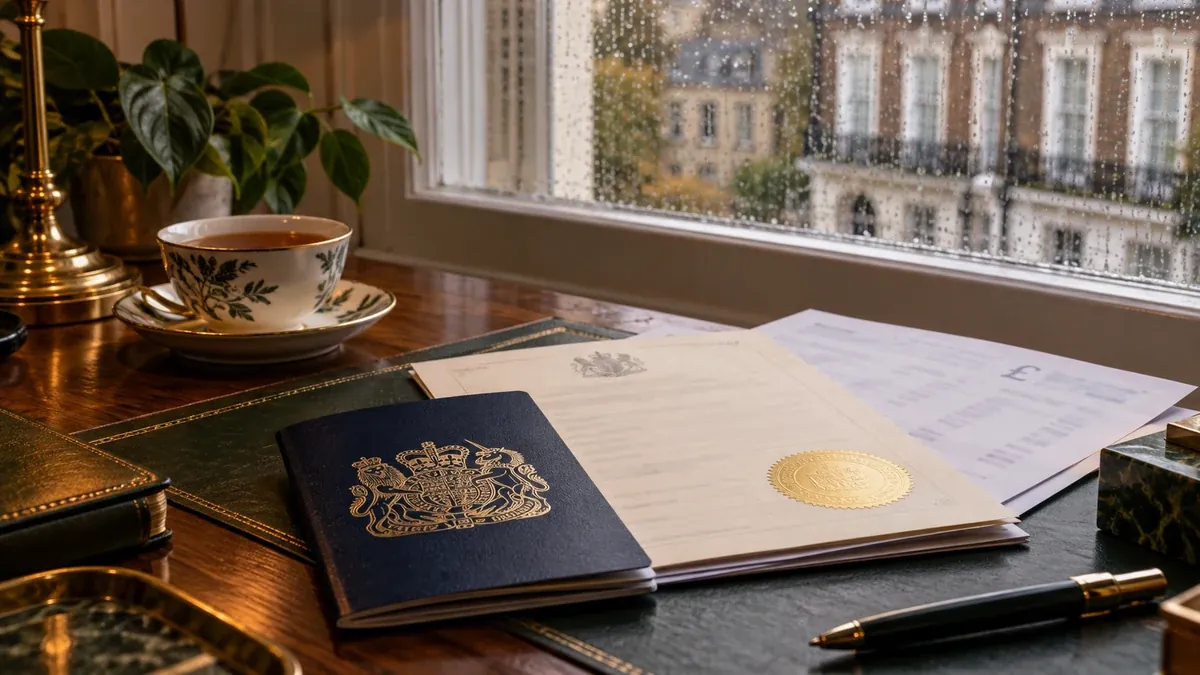
A UK public document is accepted in Brazil once it carries an apostille, which in the United Kingdom is issued by the FCDO Legalisation Office. After that, it needs a sworn translation into Portuguese, made in Brazil by a registered sworn translator.
Both countries are parties to the Hague Apostille Convention, so no consular legalisation is needed. The apostille confirms the signature or seal is genuine; it does not confirm the content or translate it.
Which UK documents a Brazilian purchase usually needs
- Passport (a certified copy, when an original cannot be shown in person).
- Marriage certificate, civil partnership certificate or decree absolute, to define your marital status in the deed.
- Power of attorney, if it is signed before a UK notary public instead of at the consulate.
Sworn translation is done in Brazil
Brazilian notaries and registries accept translations made by a tradutor público (sworn public translator) registered with a Brazilian commercial board. A translation made in the UK, even by a certified translator, is generally not treated as sworn in Brazil.
Marital status matters more than British buyers expect: depending on the property regime, a spouse can have a share in the property, and the deed must say so. Settle that question before the deed is drafted.
CPF and power of attorney at the Brazilian consulate in London or Edinburgh
The Brazilian consular posts in the United Kingdom can take the CPF request and sign a power of attorney as a Brazilian public document. A power of attorney signed at the consulate does not need an apostille to be used in Brazil.
The Consulate General of Brazil in London serves most of the country, and Brazil also has a consular office in Edinburgh. Which one covers your address, whether you need an appointment and what each one issues should be checked on the consulate's website before you plan the trip.
The CPF first
The CPF is the taxpayer number issued by the Receita Federal.
Without it there is no deed and no exchange contract, and having one does not make you a Brazilian tax resident. Our page on the Brazil CPF number explains the routes and what to do if the number already exists but is irregular.
A power of attorney written for this purchase
If you will not be in Brazil for the deed, a power of attorney lets someone sign for you. In Brazil, a power of attorney to buy property must name the property or at least give specific powers to buy, pay, sign the deed and deal with the registry.
A generic power to "manage my affairs" is often refused. Ask for the wording in Portuguese before you book the consulate.
The alternative is to sign before a UK notary public. In that case the document needs an FCDO apostille and a sworn translation in Brazil, which adds time. Some notaries in Brazil also allow signing online through e-Notariado.
From pounds to reais: what happens on the UK side
The money should leave a UK account in your name and arrive in Brazil through a foreign exchange contract with a Brazilian bank. That record proves the origin of the funds to the notary, to the Central Bank and, years later, when you sell and want to take the money back.
On the UK side, it is an ordinary international payment in pounds, made by your bank or an FCA-authorised payment firm, which may ask where the money came from. Keep each transfer confirmation, with sender, amount and date: it connects your UK account to the price in the deed.
On the Brazilian side, the money becomes reais through a contract with an authorised bank, and the investment is recorded with the Banco Central do Brasil under Lei 14.286/2021. Those steps, the four payment routes and the proof the notary asks for are covered in our guide to sending money to Brazil to buy property, so they are not repeated here.
Do not pay the seller in the UK. If a seller or an agent asks for part of the price to be paid into a UK or European account, the deed cannot show that money entering Brazil. That weakens your proof of investment and the base for the tax on a future sale.
The exchange rate also affects your UK tax
HMRC works out a capital gain in pounds, converting the purchase price at the rate on the day you bought and the sale price at the rate on the day you sold.
A property that gained in reais can show a loss in pounds, and the opposite can happen too. Keep the rate used on each transfer; your UK accountant will need it.
Tax in the UK: what HMRC expects from an owner of Brazilian property
If you are UK resident, HMRC taxes your worldwide income and gains, including rent and profit from a property in Brazil. Brazil may also tax the same income, and the UK lets you deduct the Brazilian tax from the UK tax on that income under Foreign Tax Credit Relief, within its limits.
Owning a property abroad that earns nothing is not, on its own, taxed in the UK. Tax appears when it produces income or is sold.
Rental income from a flat in Brazil
Rent from a Brazilian property is foreign property income. It is reported on the foreign pages of the Self Assessment return (SA106), converted into pounds.
In Brazil, rent paid to an owner who lives abroad is usually taxed at source, and the tenant, the agent or your attorney in Brazil handles that withholding. The Brazilian tax paid is the figure you take to the Foreign Tax Credit Relief claim.
Selling the property later
Brazil taxes a non-resident's gain in reais; as a UK resident you also report it to HMRC in pounds, and the Brazilian tax can usually be credited against the UK tax on the same gain, but not beyond it. Our article in Portuguese on capital gains tax for non-resident sellers (in Portuguese) describes the Brazilian side.
Is there a UK–Brazil double taxation treaty?
A comprehensive UK–Brazil income tax convention was signed in November 2022, and the UK approved it in 2023.
Whether it is already in force, and from which tax year it applies, must be checked on GOV.UK and with the Receita Federal on the day you rely on it. Where no treaty applies, the UK still gives unilateral credit for foreign tax.
The end of non-dom status
Since April 2025, the UK no longer offers the remittance basis to non-domiciled residents.
It was replaced by the foreign income and gains (FIG) regime, which relieves foreign income and gains only for people in their first years of UK residence after a long period abroad. If you relied on the old rules, review this with a UK adviser before buying.
The UK State Pension in Brazil
The UK has no social security agreement with Brazil, so a State Pension paid there is generally not uprated each year; confirm with the Department for Work and Pensions. Our guide to retiring in Brazil covers the residence side.
Inheritance: UK Inheritance Tax and the Brazilian ITCMD
Property in Brazil is passed on through a Brazilian probate (inventário) and pays the Brazilian state inheritance tax, the ITCMD. If the owner was a long-term UK resident, UK Inheritance Tax can apply to the same property, and the credit for the Brazilian tax must be claimed in the UK.
A UK will or grant of probate does not transfer a Brazilian matrícula: heirs reach the record only after the inventário is registered. The ITCMD is charged by the state where the property is, and its rules for owners abroad changed recently.
On the UK side, since April 2025 the scope of Inheritance Tax depends on long-term residence rather than domicile. A long-term UK resident is within UK Inheritance Tax on worldwide assets, Brazilian property included. There is no inheritance tax treaty between the two countries, so relief for the Brazilian tax comes from the UK's unilateral rules.
Who appears on the deed and how the property will pass on are questions for the start, not for later.
Where UK buyers look: Rio, Florianópolis and Salvador
British buyers tend to search for Rio de Janeiro, Florianópolis and Salvador. The documents, the money and the UK tax are the same in all three; what changes is the local registry, the transfer tax and how often the property sits on federal coastal land.
- Rio de Janeiro. Many seafront buildings sit on navy land. See our guide to buying property in Rio de Janeiro.
- Florianópolis. Beach plots often raise protected-area questions. Our guide to buying property in Florianópolis is in Portuguese.
- Salvador. Where Dr. Gabriela's office is, with a 3% city transfer tax. Read the guide to Salvador real estate for foreign buyers.
Before any offer, add up taxes and fees with the guide to property buying costs in Brazil.
Step by step: buying from the UK without flying back and forth
A UK buyer can prepare almost everything from home: the CPF, the apostilled documents, the power of attorney and the transfer. The title check and the registration happen in Brazil, and the deed can be signed by your attorney.
CPF.
Request it through the Brazilian consulate that covers your address, or through an attorney in Brazil.
Documents.
Order the FCDO apostille on your marriage or divorce certificate and any other UK document the notary will need.
Title check.
Send the seller's documents for a review of the matrícula, the seller and the contract before any deposit.
Contract.
Sign the preliminary contract with the conditions the review found.
Power of attorney.
Sign it at the consulate or before a UK notary, using wording prepared for this purchase.
Transfer.
Send the pounds from your UK account; the Brazilian bank closes the exchange contract and the investment is recorded.
Deed and registration.
Your attorney signs the deed, the transfer tax is paid and the deed is registered until the matrícula shows your name.
UK records.
Keep the deed, the exchange contracts and the rates used for HMRC and for a future sale.
If the property is meant to support a residence application, check the rules on the Brazil investor visa before you choose the property, because the value and the type of property matter.
Checklist before you transfer the deposit
CPF issued
and regular with the Receita Federal.
Matrícula read
, with the seller as the registered owner and no liens that block the sale.
Seller certificates
and navy land status checked.
Marital status
documented with an FCDO apostille, ready for translation.
Power of attorney wording
approved before the consulate appointment.
UK tax view
from your accountant on rent and gains.
Common mistakes British buyers make in Brazil
Most problems come from treating the Brazilian purchase like a purchase in England: trusting the agent's searches, paying before registration and leaving the tax questions for later.
- Relying on the agent's checks. In Brazil, the agent is paid by the sale. The matrícula and the seller certificates need an independent reading.
- Thinking the deed is completion. Ownership comes with registration; a signed deed that is never registered leaves you exposed to the seller's creditors.
- A generic power of attorney. Powers that do not mention buying property are refused, and the consulate appointment has to be repeated.
- Paying part of the price abroad. Money that never entered Brazil is hard to prove when you sell and want to take the proceeds back.
- Copying a US guide on tax. American rules do not apply to a UK resident; HMRC has its own forms and reliefs.
If you know someone in the United States in the same position, our sister guide for US citizens buying property in Brazil covers the American side.
Working across time zones and finding a lawyer
Brasília time is UTC−3 all year, so Brazil is three hours behind the UK in winter (GMT) and four hours behind in summer (BST). A morning call in Brazil is an early afternoon call in London.
Brazil has not used daylight saving time since 2019, so the gap changes only when UK clocks change.
The FCDO list of lawyers in Brazil
The UK government publishes a list of lawyers in Brazil for British nationals.
It is a practical starting point, but the FCDO states that it does not recommend or vouch for anyone on it. Whichever lawyer you choose, ask for their registration with the Brazilian Bar (OAB), which you can check on the national register, and for a written scope of the work.
Dr. Gabriela Pereira is registered as OAB/BA 30.943, and you can read about her career as a former registry officer in Bahia.
Frequently asked questions about buying property in Brazil from the UK
These are the questions British buyers ask most once they find a property and start the paperwork at home. Each answer stands on its own.
Do I need a visa to buy property in Brazil as a UK citizen?
No. A UK citizen can own urban property in Brazil without a visa or residence permit. You need a CPF to sign the deed. Residence is a separate application.
Who issues the apostille on UK documents for Brazil?
The FCDO Legalisation Office issues apostilles on UK public documents. Brazil then requires a sworn translation into Portuguese, made by a sworn public translator registered in Brazil.
Can I get a CPF in the UK?
Yes. The Brazilian consular posts in the UK can take the request, and an attorney in Brazil can also apply for you. Check on the consulate's website which post covers your address.
Do I pay UK tax on rent from a flat in Brazil?
If you are UK resident, yes: it goes on the foreign pages of your Self Assessment return. Brazil usually taxes the rent at source as well, and you can claim Foreign Tax Credit Relief for the Brazilian tax, up to the UK tax on that income.
Does my UK will cover my property in Brazil?
Not on its own. Property in Brazil passes through a Brazilian probate (inventário) and pays the Brazilian ITCMD before the heirs are registered. UK Inheritance Tax may also apply if the owner was a long-term UK resident.
This guide is general information and does not replace a lawyer's review of your case. UK tax questions should be confirmed with a UK tax adviser.